

El “Nuevo” Formulario I-485, Solicitud de Ajuste de Estatus
Santos Lloyd Team • August 10, 2023
Click here to read this article in English
El Congreso estableció que la solicitud de visa, admisión o ajuste de estatus de un no ciudadano podría ser denegada si se determina que es "probable que en algún momento se convierta en una carga pública".
Según INA 212(a)(4), un solicitante de visa, admisión o ajuste de estatus que probablemente se convierta en una carga pública es inadmisible. El INA no define carga pública. Pero especifica que, como mínimo, se deben considerar ciertos factores al determinar si es probable que un no ciudadano se convierta en una carga pública en un momento determinado.
El 9 de septiembre de 2022, el DHS publicó una regla final que, entre otras disposiciones, define "que probablemente en cualquier momento se convierta en una carga pública" como "que probablemente en cualquier momento dependa principalmente del gobierno para su subsistencia, como lo demuestra el recibo de asistencia pública en efectivo para el mantenimiento de los ingresos o la institucionalización a largo plazo a expensas del gobierno". Finalmente, el 23 de diciembre de 2022, el Departamento de Seguridad Nacional (DHS, por sus siglas en inglés) anunció que el motivo de inadmisibilidad por carga pública entraría en vigencia.
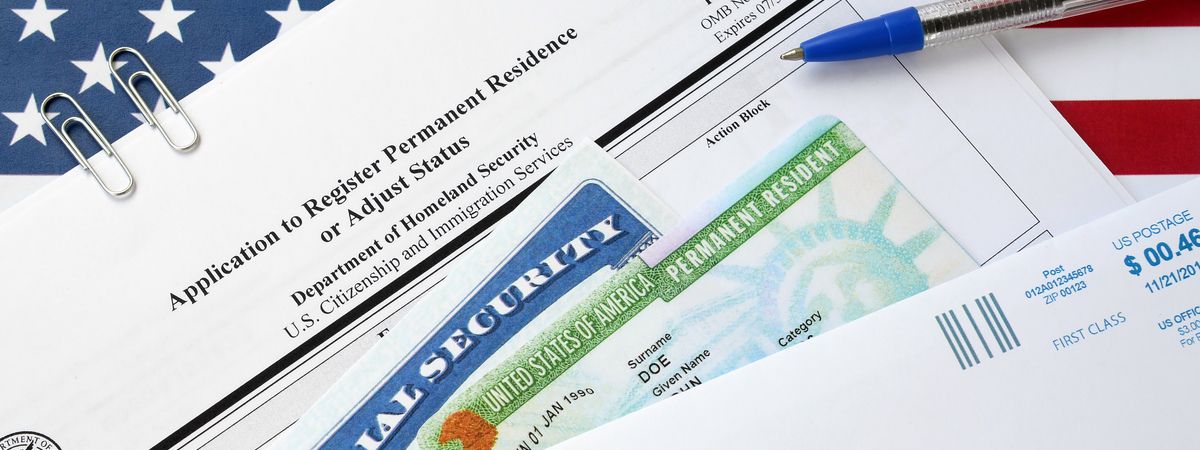
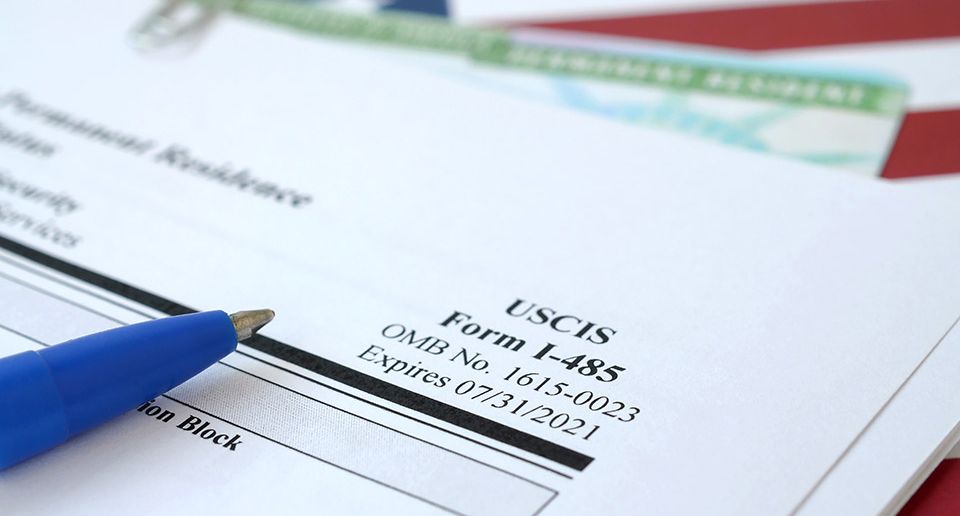
USCIS debe aplicar esta determinación de inadmisibilidad por cargo público a la mayoría de los no ciudadanos que solicitan la residencia permanente legal/Tarjeta verde al adjudicar el Formulario I-485 (Solicitud de ajuste de estatus, también conocido como el formulario que le otorgará una tarjeta verde dentro de los EE. UU.) En consecuencia, a partir del 23 de diciembre de 2022, todos los solicitantes deben usar la nueva versión del Formulario I-485, que incluye una nueva parte de carga pública y varias preguntas adicionales.
Este cambio hará que sea más oneroso para las personas que intentan ajustar su estatus mientras están en los EE. UU., ya que el solicitante deberá proporcionar cuidadosamente la siguiente información:
- Número de personas en el hogar
- Ingreso Anual del Hogar
- Valor total de los bienes del hogar
- Valor total de las obligaciones del hogar
- Grado o nivel escolar más alto completado
- Lista de habilidades relacionadas con el trabajo, certificaciones, licencias, certificados educativos
- Si un solicitante alguna vez ha recibido programas de beneficios en efectivo para el mantenimiento de ingresos
- Si un solicitante ha recibido alguna vez una institucionalización a largo plazo a expensas del gobierno
Estos cambios hacen que sea aún más importante tener un abogado con licencia que trabaje con usted durante todo su proceso de inmigración. Si tiene alguna pregunta, no dude en ponerse en contacto con nuestra oficina.
Este blog no busca constituir una asesoría legal y nada de lo que aquí lea debe interpretarse como el establecimiento de una relación abogado-cliente. Programe una consulta con un abogado de inmigración antes de actuar basado en cualquier información contenida en el presente.
This Facebook widget is no longer supported.
Similar Posts
Congress established that a noncitizen's application for a visa, admission, or adjustment of status could be denied if they are found "likely at any time to become a public charge."
The answer to this is: it depends! Eligibility criteria for public benefits varies among states. It is always important to check what the state you live in requires for someone to receive public benefits. In the state of California, you might be eligible for public benefits depending on your immigration status. Public benefits may help you cover basic expenses like food, housing, and healthcare.

The answer to this question changed considerably after President Biden rolled back some of former President Trump’s harsh immigration policies. In 2019, Trump had issued an executive order known as “The Public Charge Final Rule,” which caused the receipt of most public assistance programs to negatively impact AOS applications, and with few exceptions (e.g. emergency services and Medicaid recipients who were pregnant or under the age of 21).
Santos Lloyd Law Firm takes great pride in announcing that Partner Flavia Santos Lloyd has been invited to join the Fellows of the American Bar Foundation. As a highly selective global network, the organization recognizes legal professionals across both the public and private sectors who embody the absolute highest standards of the practice. Admission to this distinguished group highlights Flavia’s outstanding legal career, professional integrity, and deep impact on the legal community. Our team celebrates Flavia on this well-deserved recognition!

On September 14, 2026, the U.S. District Court for the District of Massachusetts issued a nationwide preliminary injunction in Presidents' Alliance on Higher Education and Immigration v. U.S. Department of Homeland Security , halting the implementation of the Department of Homeland Security (DHS) final rule that was scheduled to eliminate “duration of status” (D/S) on September 15, 2026. As a result of this nationwide order, DHS is blocked from enforcing fixed periods of admission for F-1 students, J-1 exchange visitors, and I media representatives while the litigation moves forward. Because the current “duration of status” framework remains in full effect, F, J, and I visa holders are not required to file Form I-539 extension of stay applications to remain in valid status beyond program end dates at this time. Furthermore, restrictions on academic transfers, constraints on enrolling in second programs at the same degree level, 240-day caps on continued employment while extensions are pending, and shortened grace periods do not apply during the injunction. F-1 nonimmigrants retain the full 60-day post-completion grace period, and J-1 holders maintain their 30-day grace period. However, please note that this preliminary injunction is not a final ruling invalidating the rule , and a status conference is scheduled for October 2, 2026, to determine next steps in the litigation. Immediate Practice Tips: Inspect I-94 Travel Records Upon Reentry: F, J, and I visa holders currently admitted under D/S retain their status and should continue to be readmitted under D/S following international travel until the injunction is lifted. However, because the I-94 record controls legal stay, travelers must inspect their CBP-issued Form I-94 immediately upon reentry to confirm the "Admit Until Date" states "D/S" rather than a specific expiration date. If a specific date is mistakenly recorded, contact a local CPB Deferred Inspection Site. Notify HR and Review Workplace Compliance: Employers sponsoring F-1 or J-1 employees should inform HR and hiring managers that the September 15 fixed-period rule is postponed and standard D/S rules govern. This development does not alter standard filing windows or Form I-9 verification procedures for post-completion OPT or STEM OPT extensions. Maintain Operational Readiness and Defer Unnecessary Filings: Visa holders and employers should defer travel or filing strategy decisions made solely in anticipation of the fixed-admission rule. Because DHS may appeal or the court could alter the timeline on short notice, institutions and visa holders should maintain readiness to adjust plans if implementation resumes. There are many evolving components to this litigation. If you are an F-1, J-1, or I visa holder, sponsoring institution, or employer, you should proactively coordinate with your international student office and legal counsel to protect your status and monitor upcoming court proceedings.

The Department of Homeland Security (DHS) published its final rule eliminating the longstanding "duration of status" (D/S) policy for F, J, and I visa holders, replacing it with a fixed period of admission effective September 15, 2026. This rule requires that those who need additional time to complete their programs must file Form I-539 with USCIS or travel abroad and seek to reenter to extend their authorized period of stay. F and J visa holders present in the U.S. and in valid status on September 15, 2026, will be allowed to remain in the United States until the Program End Date listed on their current Form I-20 (for F-1s) or Form DS-2019 (for J-1s), up to a maximum of four years (until September 15, 2030) plus a 60-day grace period for F-1s and a 30-day grace period for J-1s, without filing an Extension of Status request with USCIS. However, this safety net only applies while staying in the U.S.; international travel and subsequent reentry after September 15, 2026 will result in readmission under the new rule with an I-94 that expires on the Program End Date or Employment Authorization Document (EAD) expiration, but no later than four-years after their date of re-entry. Additionally, once re-admitted under the new rules, F-1s will only receive a 30-day grace period. Immediate Practice Tips: Any F-1 or J-1 nonimmigrant currently in the U.S. who plans to change programs, start a new degree level, or needs more time to complete their studies must work with their school or program sponsor to update their SEVIS record and receive an extended Form I-20 or DS-2019 before September 15, 2026. Eligible F-1 students should submit their post-completion OPT or STEM OPT work authorization applications (Form I-765) before September 15, 2026, to secure their status and drastically reduce the likelihood of needing a Form I-539 extension application. Any F-1 student who is eligible to apply for OPT or STEM OPT before March 18, 2027, should do so as soon as they are eligible to file their Form I-765. Since F-1s can file OPT applications up to 90 days in advance of graduation, F-1 students graduating before June 15,2027, should be able to file their OPT applications before March 18, 2027, and should do so to avoid also having to file Form I-539 to extend their stay. Thus, most F-1 students graduating in December 2026 and May/June 2027 should be able to take advantage of the transition rule’s delay in having to file Form I-539 applications and should only need to file Form I-765 to apply for OPT. Incoming F-1 and J-1 students who can enter the United States before the September 15, 2026 effective date (within the permissible 30-day window prior to their program start) should do so to benefit from the transition rules, including the full 60-day F-1 grace period and deferred extension requirements. Students (F-1 and J-1) who are planning international travel should return before the effective date if possible to preserve their transition benefits. There are many parts of the rule that are not discussed here. If you are currently an F-1 or J-1 visa holder, you should proactively coordinate with your institutions and international office to protect your status and stay informed.
