

Visa U Ajuste de Estatus y Ciudadanía Estadounidense
Denice Flores • August 3, 2023

Click here to read this article in English
¡Si su visa U fue aprobada, puede ser elegible para solicitar convertirse en residente permanente legal de los Estados Unidos y convertirse en ciudadano estadounidense! Aquí está lo que necesitas saber:
A un individuo con estatus de No Inmigrante U (U-1, U-2, U-3, U-4, U-5), se le otorga un permiso de trabajo por 4 años bajo la categoría de visa U (A19) o (A20), esta es la “visa U”. La persona debe tener su estatus de no inmigrante U durante al menos 3 años, a partir de la fecha en que fue aprobado, para ser elegible para solicitar una green card y convertirse en residente permanente legal ("LPR") de los Estados Unidos. Este proceso también se conoce como “ajuste de estatus”.
Tenga en cuenta que al solicitar convertirse en LPR y ciudadano estadounidense ("USC"), el solicitante debe
seguir siendo una persona de buen carácter moral. Esto significa que el solicitante debe evitar meterse en cualquier tipo de problema con la ley, para ser considerado una persona de buen carácter moral y un buen candidato para convertirse en LPR y USC.
Después de tener una visa U durante 3 años, el destinatario de la visa U debe solicitar convertirse en un LPR con los Servicios de Ciudadanía e Inmigración de los EE. UU. ("USCIS"). Es importante tener en consideración que si un destinatario de la visa U solicita convertirse en LPR durante el tiempo que todavía tiene la visa U vigente y válida, su estatus de no inmigrante U se extiende automáticamente hasta que USCIS emita una decisión sobre la solicitud de ajuste de estatus. Esto significa que incluso si el permiso de trabajo de la visa U vence, el solicitante todavía tiene estatus de no inmigrante U hasta que USCIS emita una decisión para la solicitud de ajuste de estatus. El solicitante puede demostrar que todavía tiene el estatus proporcionando su permiso de trabajo con visa U y el Aviso de recibo del Formulario I-485, Solicitud de ajuste de estatus. (El formulario I-485 es la solicitud de tarjeta verde para convertirse en LPR).
Algunas de las pruebas que deben incluirse con la solicitud para ajustar el estatus a un LPR son pruebas documentales que demuestren que el solicitante ha residido en los EE. UU. durante el tiempo que ha tenido la visa U (al menos 3 años). Algunos ejemplos de evidencia para demostrar esto incluyen los talones de pago de empleo del solicitante, contratos de arrendamiento/alquiler, facturas de servicios públicos, estados de cuenta bancarios, declaraciones de impuestos sobre la renta y fotografías.
Como beneficiario de una visa U y solicitante de ajuste de estatus, una diferencia en este proceso es que generalmente no se requiere que el solicitante asista a entrevista ante USCIS. Esto significa que el solicitante recibirá su decisión por correo, así como su tarjeta de Residente Permanente, en caso tal se aprobase.
Después de que el solicitante ajusta su estatus a un LPR, el solicitante debe mantener la residencia permanente legal durante 5 años en los EE. UU., para ser elegible para solicitar la ciudadanía estadounidense. Al solicitar la ciudadanía estadounidense, el solicitante será entrevistado y deberá cumplir con todos los demás requisitos de elegibilidad (prueba de educación cívica, prueba de inglés, prueba de escritura) como la mayoría de los demás solicitantes que solicitan la ciudadanía estadounidense.
Tenga en cuenta que un titular de visa U que solicita convertirse en LPR y luego en USC no requiere un patrocinador o peticionario. Más bien, el solicitante es un auto peticionario, lo que significa que está solicitando por su cuenta para obtener un estatus legal en los EE. UU.
Si tiene alguna inquietud sobre cómo solicitar su tarjeta de Residente Permanente, y luego la ciudadanía, como beneficiario de una visa U, programe una consulta con uno de nuestros abogados experimentados en el área.
Esperamos con interés trabajar con usted.
Este blog no busca constituir una asesoría legal y nada de lo que aquí lea debe interpretarse como el establecimiento de una relación abogado-cliente. Programe una consulta con un abogado de inmigración antes de actuar basado en cualquier información contenida en el presente.
This Facebook widget is no longer supported.
Denice Flores
Similar Posts

The U nonimmigrant status (U visa) offers vital protection and legal relief to victims of certain crimes who have suffered mental or physical abuse and are willing to assist law enforcement in the investigation or prosecution of the crime. U visa recipients are granted a work authorization card and can live and work legally in the United States for up to four years, with a path to lawful permanent residency (green card) after having a U visa for three years. The U visa serves as a beacon of hope for survivors of crime who courageously step forward to help law enforcement while navigating their own recovery. Understanding the eligibility criteria and gathering the right documentation is essential to building a strong case. To qualify for a U visa, an applicant must meet all of the following criteria: 1. Victim of a Qualifying Crime You must have been a victim of a qualifying criminal activity , such as: Domestic violence Sexual assault Human trafficking Kidnapping Felonious assault Extortion Witness tampering Other serious offenses A full list of qualifying crimes is provided by U.S. Citizenship and Immigration Services under INA § 101(a)(15)(U). See also: https://www.uscis.gov/humanitarian/victims-of-criminal-activity-u-nonimmigrant-status . 2. Suffered Substantial Physical or Mental Abuse You must demonstrate that you suffered substantial harm as a result of the crime. This may include: Physical injuries Psychological trauma Lasting emotional distress 3. Helpful to Law Enforcement You must be, have been, or are likely to be helpful in the investigation or prosecution of the crime. This includes: Reporting the crime to authorities Cooperating with police or prosecutors Providing information that aids law enforcement efforts A law enforcement certification (Form I-918, Supplement B) is required as proof of this cooperation. 4. The Crime Occurred in the U.S. or Violated U.S. Laws The criminal activity must have: Taken place in the U.S., its territories, or possessions, and Violated U.S. federal, state, or local laws Applicants must also be admissible to the United States. If you are not, based on your immigration history, you may request a waiver using Form I-192 (Application for Advance Permission to Enter as a Nonimmigrant) . Certain qualifying family members may be included in your U visa petition: If you are under 21 years old: Your parents, unmarried siblings under 18, spouse, and children may be eligible to apply with you. If you are 21 years or older: Your spouse and children may qualify to apply with you. Each derivative must meet specific requirements and file appropriate forms. If you have any questions or would like to know more about the U visa eligibility requirements, contact our office to schedule a consultation with one of our experienced immigration attorneys.

USCIS has a specific application that allows principal U-visa holders (U-1) to petition for family members, even after their U visa was approved. If this petition is approved, the family member can obtain lawful permanent resident (LPR) status in the United States.
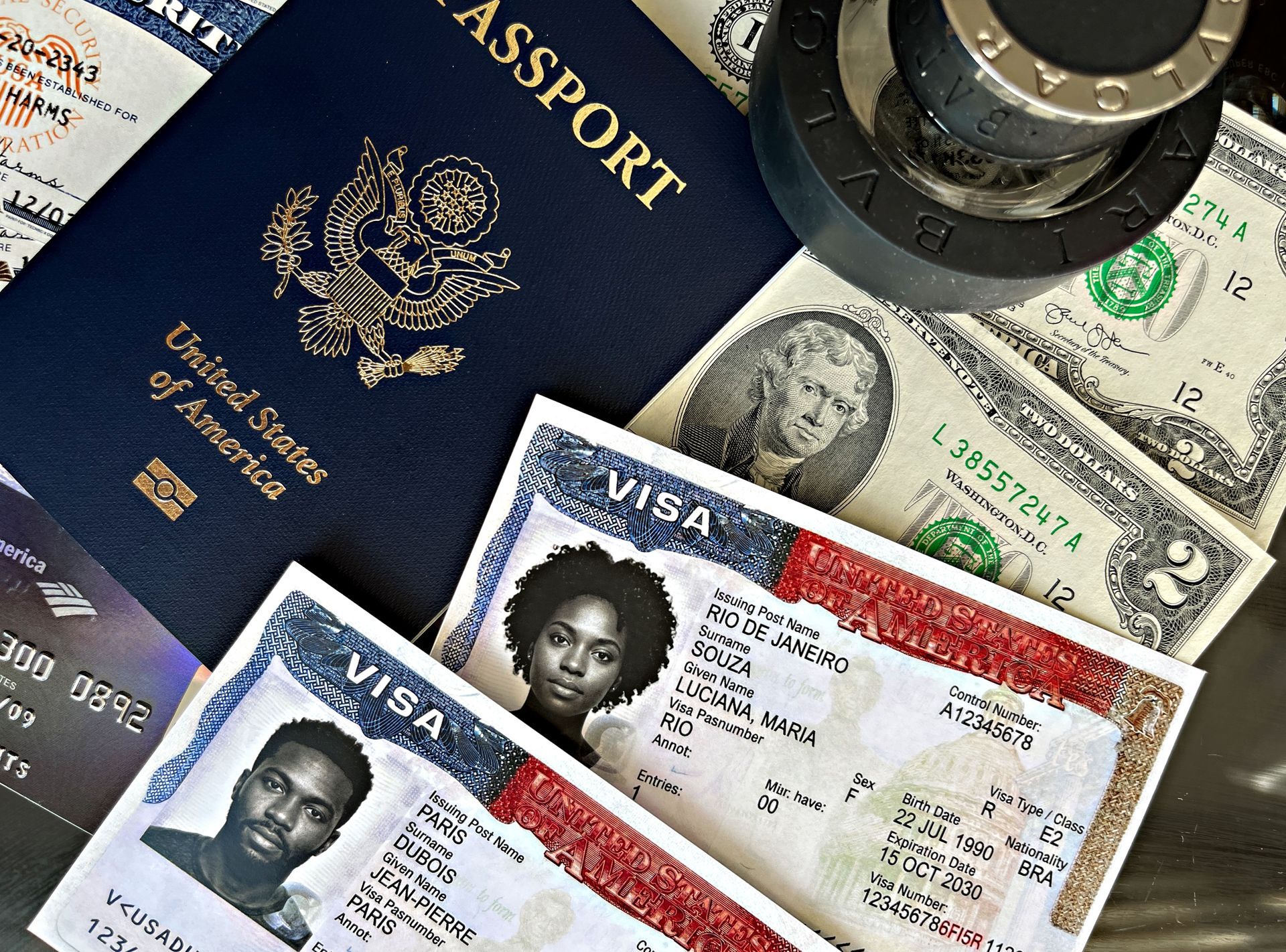
October begins a new federal fiscal year, but that does not mean every green card applicant moves to the front of the line. The Department of State’s October 2026 Visa Bulletin sets out the visa availability that applicants in family-sponsored and employment-based preference categories need to review this month.
Santos Lloyd Law Firm takes great pride in announcing that Partner Flavia Santos Lloyd has been invited to join the Fellows of the American Bar Foundation. As a highly selective global network, the organization recognizes legal professionals across both the public and private sectors who embody the absolute highest standards of the practice. Admission to this distinguished group highlights Flavia’s outstanding legal career, professional integrity, and deep impact on the legal community. Our team celebrates Flavia on this well-deserved recognition!

On September 14, 2026, the U.S. District Court for the District of Massachusetts issued a nationwide preliminary injunction in Presidents' Alliance on Higher Education and Immigration v. U.S. Department of Homeland Security , halting the implementation of the Department of Homeland Security (DHS) final rule that was scheduled to eliminate “duration of status” (D/S) on September 15, 2026. As a result of this nationwide order, DHS is blocked from enforcing fixed periods of admission for F-1 students, J-1 exchange visitors, and I media representatives while the litigation moves forward. Because the current “duration of status” framework remains in full effect, F, J, and I visa holders are not required to file Form I-539 extension of stay applications to remain in valid status beyond program end dates at this time. Furthermore, restrictions on academic transfers, constraints on enrolling in second programs at the same degree level, 240-day caps on continued employment while extensions are pending, and shortened grace periods do not apply during the injunction. F-1 nonimmigrants retain the full 60-day post-completion grace period, and J-1 holders maintain their 30-day grace period. However, please note that this preliminary injunction is not a final ruling invalidating the rule , and a status conference is scheduled for October 2, 2026, to determine next steps in the litigation. Immediate Practice Tips: Inspect I-94 Travel Records Upon Reentry: F, J, and I visa holders currently admitted under D/S retain their status and should continue to be readmitted under D/S following international travel until the injunction is lifted. However, because the I-94 record controls legal stay, travelers must inspect their CBP-issued Form I-94 immediately upon reentry to confirm the "Admit Until Date" states "D/S" rather than a specific expiration date. If a specific date is mistakenly recorded, contact a local CPB Deferred Inspection Site. Notify HR and Review Workplace Compliance: Employers sponsoring F-1 or J-1 employees should inform HR and hiring managers that the September 15 fixed-period rule is postponed and standard D/S rules govern. This development does not alter standard filing windows or Form I-9 verification procedures for post-completion OPT or STEM OPT extensions. Maintain Operational Readiness and Defer Unnecessary Filings: Visa holders and employers should defer travel or filing strategy decisions made solely in anticipation of the fixed-admission rule. Because DHS may appeal or the court could alter the timeline on short notice, institutions and visa holders should maintain readiness to adjust plans if implementation resumes. There are many evolving components to this litigation. If you are an F-1, J-1, or I visa holder, sponsoring institution, or employer, you should proactively coordinate with your international student office and legal counsel to protect your status and monitor upcoming court proceedings.
