

Otro mes exitoso para las exenciones de interés nacional
Kyle Huffman • April 21, 2023

Click here to read this article in English and Portuguese
Este mes continuamos teniendo excelentes resultados en nuestros casos de exención de interés nacional EB-2.
Durante el mes de septiembre, nuestra firma recibió más de una docena de aprobaciones de exención de interés nacional. Estas aprobaciones fueron para personas de un conjunto diverso de antecedentes profesionales, incluidos empresarios, restauradores, profesionales médicos, entrenadores de fútbol, electricistas, agencias de viajes y más. Estas personas y sus familias ahora esperan obtener la residencia permanente en los Estados Unidos.
Si tiene alguna pregunta sobre lo que significa este tema para usted, programe una consulta con uno de nuestros abogados con experiencia en el área.
Esperamos poder trabajar con usted.
Este blog no pretende ser una asesoría legal y nada aquí debe interpretarse como el establecimiento de una relación abogado-cliente. Programe una consulta con un abogado de inmigración antes de actuar basado en cualquier información que aquí lea.
This Facebook widget is no longer supported.
Kyle Huffman
Similar Posts

Embarking on the exhilarating journey of launching a new tech startup in the United States is a venture that blends innovation with ambition, and the dynamic landscape of the country offers an unparalleled stage for entrepreneurs to turn their groundbreaking ideas into thriving businesses. The United States highly values its position among the technology leaders of the world. In a nation fueled by a relentless pursuit of technological advancements, the process of bringing a startup to life involves navigating through a myriad of opportunities, challenges, and regulatory landscapes. This is particularly true for foreign entrepreneurs, who must also navigate the immigration system in addition to focusing on launching their businesses. Nevertheless, the United States recognizes the value in bringing technological innovators into the country and has created special considerations for immigrants with education in STEM (Science, Technology, Engineering, and Mathematics) who are seeking to develop important cutting-edge technologies in the United States. These special considerations apply to the EB-2 National Interest Waiver, an immigrant visa classification which leads to permanent residency, and eventually citizenship in the United States. At the heart of every EB-2 National Interest Waiver petition is a proposed endeavor, and while these proposals for the United States can be about nearly anything, the Immigration Service is directed to recognize particular importance for proposals that aim to develop specific technologies that the Biden administration has identified as critical for U.S. competitiveness and national security. In particular, these areas of critical and emerging technologies include: Advanced Computing Advanced Engineering Materials Advanced Gas Turbine Engine Technologies Advanced Manufacturing Advanced and Networked Sensing and Signature Management Advanced Nuclear Energy Technologies Artificial Intelligence Autonomous Systems and Robotics Biotechnologies Communication and Networking Technologies Directed Energy Financial Technologies Human-Machine Interfaces Hypersonics Networked Sensors and Sensing Quantum Information Technologies Renewable Energy Generation and Storage Semiconductors and Microelectronics Space Technologies and Systems If you are a tech entrepreneur with an education in a STEM field, seeking to launch a startup in the U.S. developing any of these technologies, the EB-2 National Interest Waiver might be your ticket to permanent residency. Whether you're drawn to the iconic landscapes of Silicon Valley or the emerging tech scenes across the nation, the time is now to make your mark. If you are interested in applying for a National Interest Waiver to launch a startup in the United States, schedule an appointment with one of our skilled attorneys.
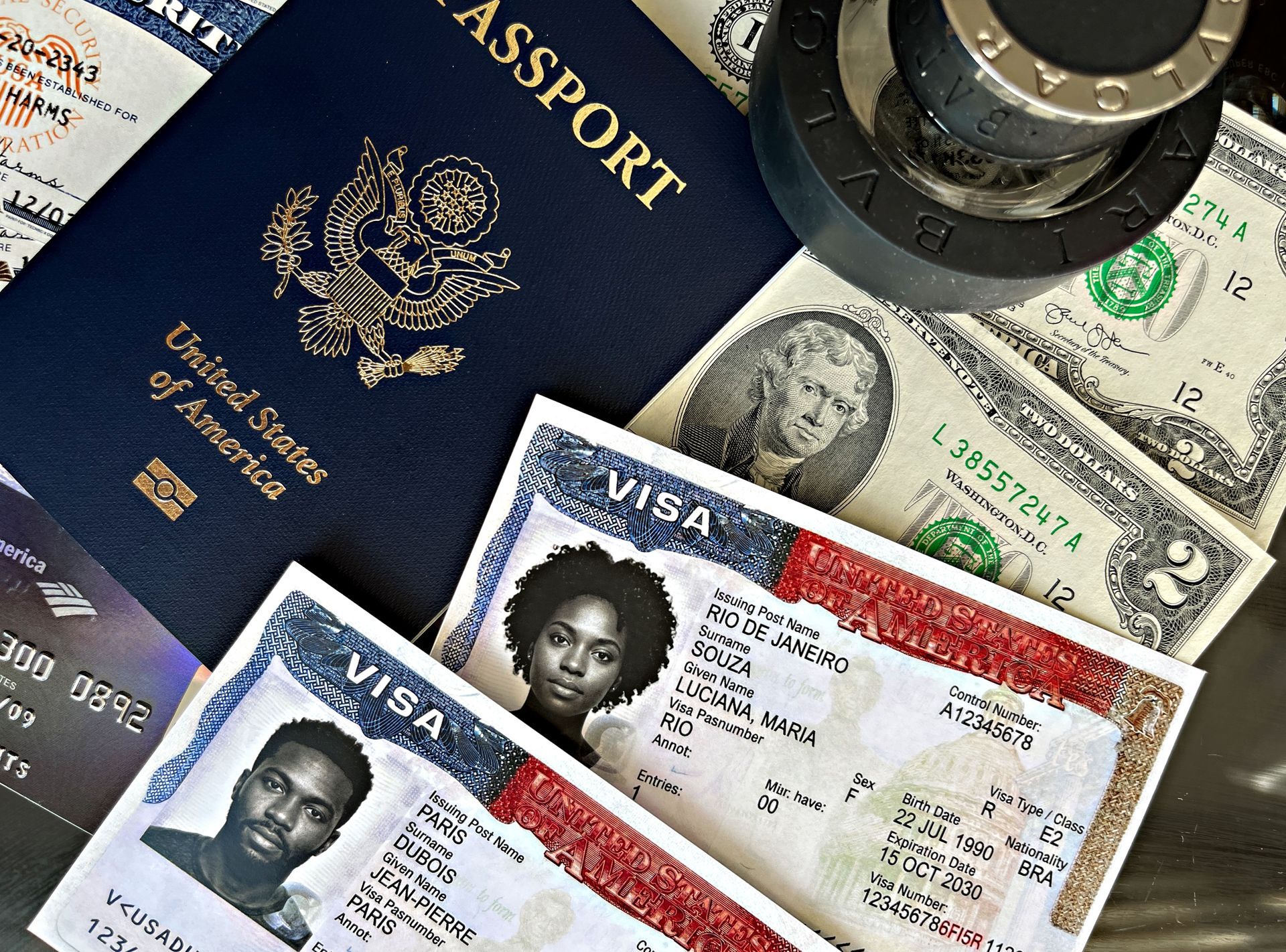
October begins a new federal fiscal year, but that does not mean every green card applicant moves to the front of the line. The Department of State’s October 2026 Visa Bulletin sets out the visa availability that applicants in family-sponsored and employment-based preference categories need to review this month.
Santos Lloyd Law Firm takes great pride in announcing that Partner Flavia Santos Lloyd has been invited to join the Fellows of the American Bar Foundation. As a highly selective global network, the organization recognizes legal professionals across both the public and private sectors who embody the absolute highest standards of the practice. Admission to this distinguished group highlights Flavia’s outstanding legal career, professional integrity, and deep impact on the legal community. Our team celebrates Flavia on this well-deserved recognition!

On September 14, 2026, the U.S. District Court for the District of Massachusetts issued a nationwide preliminary injunction in Presidents' Alliance on Higher Education and Immigration v. U.S. Department of Homeland Security , halting the implementation of the Department of Homeland Security (DHS) final rule that was scheduled to eliminate “duration of status” (D/S) on September 15, 2026. As a result of this nationwide order, DHS is blocked from enforcing fixed periods of admission for F-1 students, J-1 exchange visitors, and I media representatives while the litigation moves forward. Because the current “duration of status” framework remains in full effect, F, J, and I visa holders are not required to file Form I-539 extension of stay applications to remain in valid status beyond program end dates at this time. Furthermore, restrictions on academic transfers, constraints on enrolling in second programs at the same degree level, 240-day caps on continued employment while extensions are pending, and shortened grace periods do not apply during the injunction. F-1 nonimmigrants retain the full 60-day post-completion grace period, and J-1 holders maintain their 30-day grace period. However, please note that this preliminary injunction is not a final ruling invalidating the rule , and a status conference is scheduled for October 2, 2026, to determine next steps in the litigation. Immediate Practice Tips: Inspect I-94 Travel Records Upon Reentry: F, J, and I visa holders currently admitted under D/S retain their status and should continue to be readmitted under D/S following international travel until the injunction is lifted. However, because the I-94 record controls legal stay, travelers must inspect their CBP-issued Form I-94 immediately upon reentry to confirm the "Admit Until Date" states "D/S" rather than a specific expiration date. If a specific date is mistakenly recorded, contact a local CPB Deferred Inspection Site. Notify HR and Review Workplace Compliance: Employers sponsoring F-1 or J-1 employees should inform HR and hiring managers that the September 15 fixed-period rule is postponed and standard D/S rules govern. This development does not alter standard filing windows or Form I-9 verification procedures for post-completion OPT or STEM OPT extensions. Maintain Operational Readiness and Defer Unnecessary Filings: Visa holders and employers should defer travel or filing strategy decisions made solely in anticipation of the fixed-admission rule. Because DHS may appeal or the court could alter the timeline on short notice, institutions and visa holders should maintain readiness to adjust plans if implementation resumes. There are many evolving components to this litigation. If you are an F-1, J-1, or I visa holder, sponsoring institution, or employer, you should proactively coordinate with your international student office and legal counsel to protect your status and monitor upcoming court proceedings.
